Scripture reveals reality
Scripture reveals the true scale of existence: time, creation, the seen universe, the unseen realm beyond the veil, and the God who stands above it all.
Concepts gives the big prophetic picture: the Scriptures, the human story, resurrection, judgement, world war, the unseen realm, and the final system shown in Revelation 13.
Scripture is the framework for understanding reality.
Scripture reveals the true scale of existence: time, creation, the seen universe, the unseen realm beyond the veil, and the God who stands above it all.
Everything that has happened, is happening, or will happen belongs inside the biblical narrative. God has established all things, knows all things, and stands above all things.
The same pride, blindness, fear, compromise, and false security return in every age. The pattern is personal, religious, and geopolitical: devastation creates the cry for a final order.
If Christ does not return to the earth, there is no final justice, no restoration, and no end to evil. The Return of the Christ is not an optional doctrine. It is the hope of the world.
The world is not merely moving toward war in general, but toward global conflict. The aftermath supplies the argument that only a world system can stop mankind from destroying itself.
Civilizational events will continue on an exponential scale. The signs are described as birth pains: contractions that become closer, stronger, and harder to ignore.
Viewed across roughly ten thousand years of human history, this is not endless progress. It is a finite human story moving toward the Kingdom God said would replace the kingdoms of men.
Scripture does not present reality as only material. The unseen realm will be revealed to mankind, and once that veil is torn open, nothing in human experience remains the same.
If there is no resurrection, Christian hope collapses. The resurrection is the guarantee that death is not final and that Christ's return is physical, visible, and victorious.
There is no hope outside of Christ, but the future Scripture promises is not loss. It is justice, resurrection, restored creation, and the Kingdom of God on earth.
It is the greatest story ever told, because every other story is contained within it.
This generation has more context than any before it: the Law, the Prophets, the New Testament, Christ crucified, Christ risen, the gospel going out, and the final signs coming into view.
It also stands with the greatest weight of prophetic foreshadowing: more past fulfilments to look back on, and more present and future fulfilment beginning to come into view.
At Christ's first coming, many had the Scriptures but missed the Messiah those Scriptures announced. Others saw what was unfolding, believed Him, and became part of the work God was doing.
The same danger returns when a religious system uses Israel's rejection of Christ to dismiss Israel's place in God's promises. In opposing Israel, it can end up opposing the very prophecy it claims to understand.
In this framework, the lamb-like second beast is a counterfeit Christian witness giving moral force to the beast system. Revelation 17 shows the harlot religious system judged by God. The warning is not merely political: religious language can sound holy while standing against God's covenant purposes.
World War I and World War II each pushed the world toward global government, and each time the nations held something back. The working concept: this is the war that finishes it.
A global answer is attempted, but the nations do not surrender the power required to rule them.
Sovereignty remains guarded. Veto power exposes that the nations still refuse the full authority needed to prevent another world war.
The proposed solution demands real authority: independent funding, global taxation, religious influence, and economic compliance.
The pattern is not merely that wars happen. The concept is that world wars create the primary justification for new global structures. In the aftermath of a third world war, especially one interpreted as religious conflict, the world may finally accept the authority it previously refused: government to rule, religion to unify, and economics to enforce compliance.
Some events shake a nation. World war shakes the whole order. It creates the fear, grief, anger, and exhaustion needed for the world to accept powers it would normally refuse.
These do not cause every crisis. They make every response faster, wider, and more controllable.
AI compresses time. Robotics carries that intelligence into the physical world, making systems faster, cheaper, more automated, and harder to resist.
Everything is broken down into ones and zeros: money, assets, borders, movement, supply chains, permissions, and finally you. Global satellite systems and internet infrastructure take that digital layer everywhere.
Sudden shocks create the argument for new powers. Never waste a good crisis.
Banks, hospitals, ports, power grids, and government systems become targets. Each breach strengthens the case for one trusted security layer above nations.
The threat is carried inside people, so the response follows the person: movement controls, health status, permissions, and digital verification.
People move across borders faster than nations can absorb them. The crisis breaks down national borders and reframes people as global citizens managed by international systems.
Food, water, land, energy, and weather cross borders. The solution is framed as international coordination, central planning, and shared authority.
When debt, inflation, and currency trust break, the answer becomes a digital monetary reset sold as stability, protection, and rescue.
Deepfakes, voice cloning, real-time AI video, and generated people make it harder to know what is real. The answer becomes identity verification, authorised voices, and controlled narratives.
Mass movement and health controls create the demand to verify who a person is, where they are, and what they are permitted to access.
Connected devices and AI turn the response into infrastructure: databases, sensors, passports, ledgers, scoring, and automated enforcement.
Environmental, health, supply, and migration crises cross borders, so the answer is pushed above borders: shared rules, shared data, shared authority.
Economic collapse creates the opening for money that can be tracked, restricted, taxed, expired, approved, or denied inside the system.
The nation state is framed as too slow and divided for global crises. Power moves upward into institutions with international reach.
Religion helps people digest the sacrifice: peace is worth compliance, unity is worth surrender, and global order is the moral path.
The catalysts do not all build separate futures. They converge into one framework: money, property, movement, health, work, welfare, and access reduced to data that can be measured, switched, restricted, and enforced. The digitisation of people is not the final step. It is the cornerstone of compliance, linking each person to every permission the system controls. After World War III, the world has the justification. Religion helps make the sacrifice feel moral: global peace is worth the surrender.
The catalysts move in different lanes, but they push toward the same result: the nation state looks too small for the crisis, and the global state looks like the only solution.
The idea is acceleration. Events do not need to be equally spaced to be connected. The closer the age moves toward its climax, the more frequent and forceful the signs become.
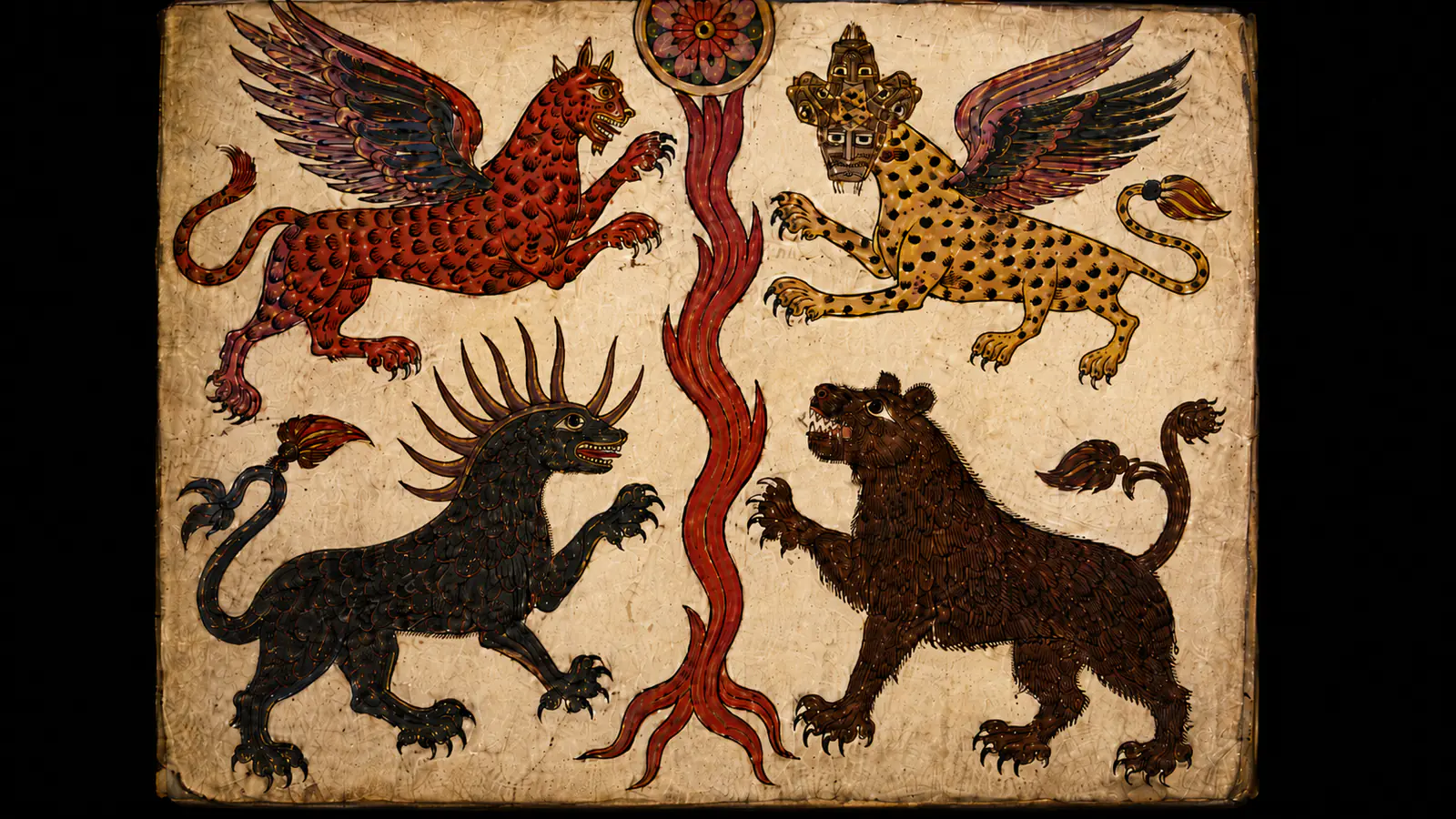
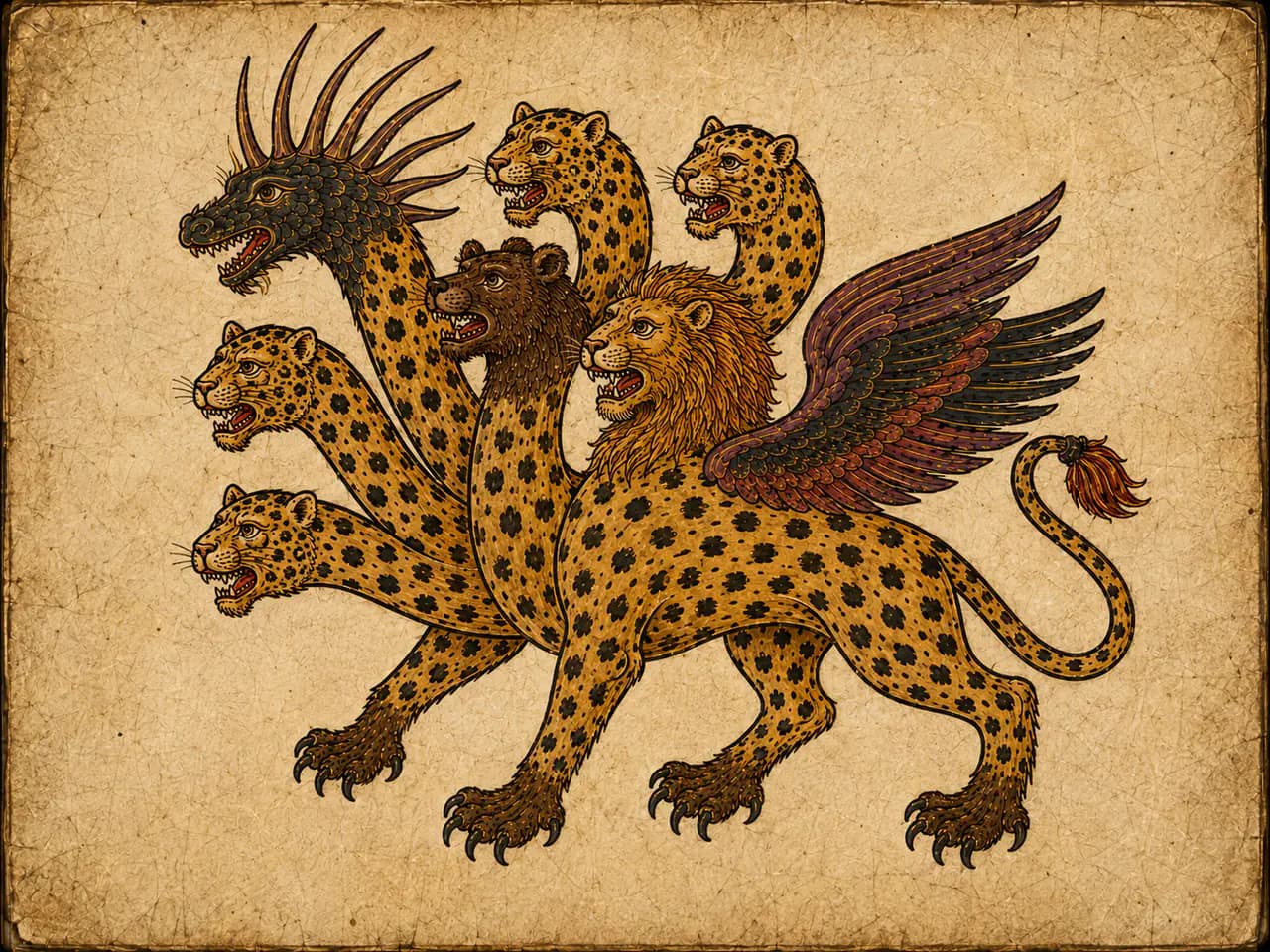
In this framework, Revelation 13 gathers Daniel's kingdom symbols into one final beast: the body of a leopard, feet of a bear, mouth of a lion, and ten horns. What Daniel saw separately now operates as one system, given authority for forty-two months.
The working concept: political war, religious war, and economic war supply the justification for political unity, religious unity, and economic unity, each offered to the world as the price of lasting peace.
Political and national division is framed as a cause of war, so political authority gathers toward centralised power in the name of peace.
Who is like unto the beast? Who is able to make war with him?
Blaming war on religious exclusivity puts every exclusive claim to God under pressure to compromise and pledge allegiance to the new system.
Causeth the earth and them which dwell therein to worship the first beast.
Once economic integration is sold as the path to peace, economic life becomes the pressure point that enforces participation.
He causeth all, both small and great, rich and poor, free and bond... that no man might buy or sell.
These headlines are not isolated events. They are signposts toward the fulfilment of Revelation 13: political, religious, and economic unity, offered to the world as the price of peace and ruthlessly enforced against anyone who will not compromise, putting extreme pressure on those whose names are written in the Lamb's Book of Life, slain from the foundation of the world.
The only question is how soon we get there.
The prophetic framework becomes a live event.