01Revelation 16:16
A named place
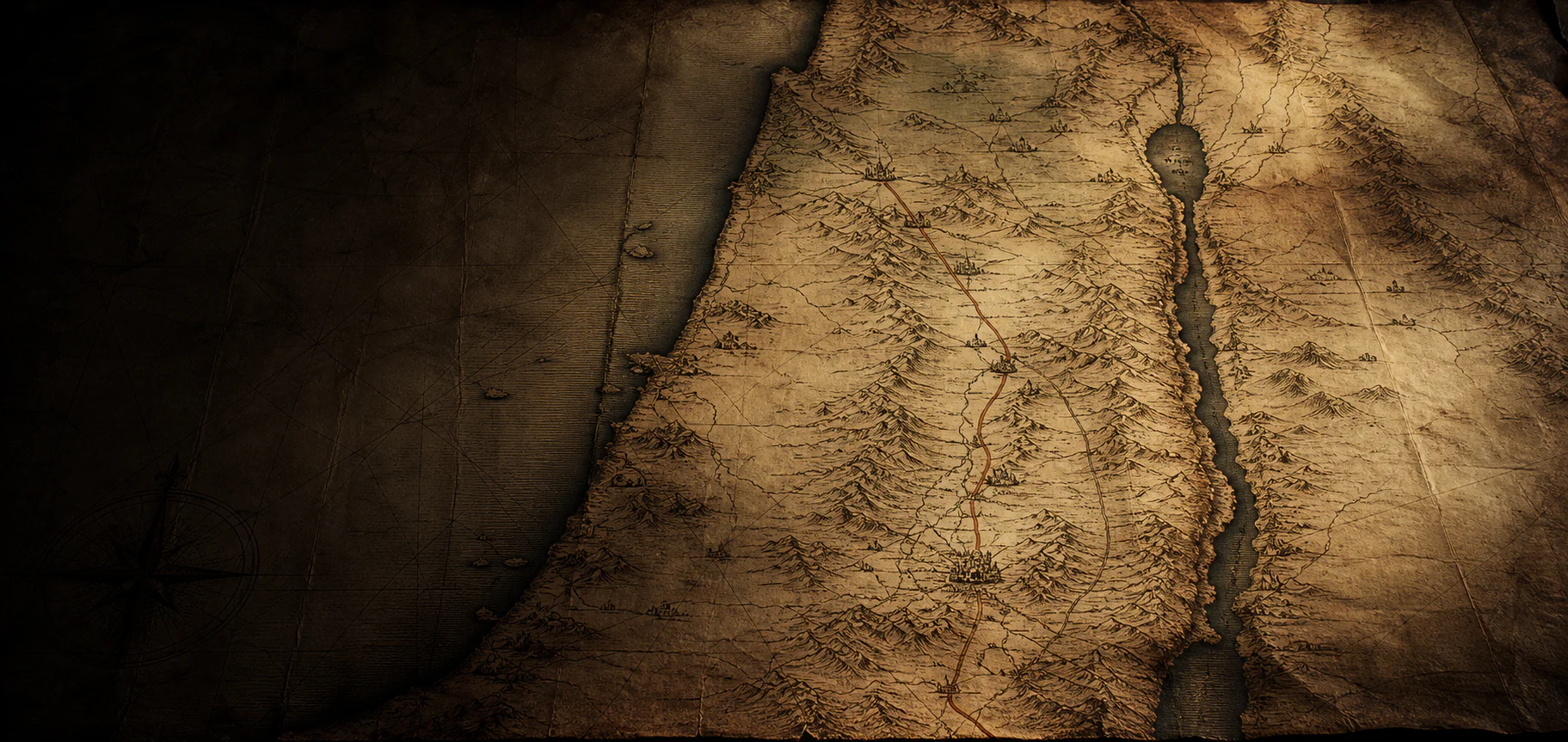
In Revelation, the rulers of the earth are gathered to a place called Armageddon. The name is commonly associated with Har Megiddo in northern Israel, overlooking the Jezreel Valley.
END X / ARMAGEDDON / FIELD MANUAL
To the world, Armageddon has become shorthand for the end of everything. Scripture gives it a location, a sequence, and a purpose: the final convergence of human rebellion, the return of Jesus Christ, and the beginning of righteous rule.
For the ultimate unveiling.
In Revelation, the rulers of the earth are gathered to a place called Armageddon. The name is commonly associated with Har Megiddo in northern Israel, overlooking the Jezreel Valley.
The word appears only once, but the event belongs to a larger prophetic picture. Joel describes the nations gathered for judgement; Zechariah places the final assault around Jerusalem.
The conflict culminates in the physical return of Jesus Christ. Armageddon is not a vague metaphor for catastrophe, but a defined biblical event that leads into righteous rule.
And He gathered them together into a place called in the Hebrew tongue Armageddon.
Revelation16:16
Armageddon has become a cultural synonym for nuclear war, planetary disaster, or any conflict that feels impossible to contain. The biblical use is far more specific. Revelation does not introduce Armageddon as a mood or a general word for destruction. It names the place where the kings of the earth are gathered.
That distinction matters. The gathering is connected with “the great day of God Almighty” in Revelation 16. It is therefore part of a defined prophetic sequence, not a label that can be attached to every war or global emergency.
The nations are gathered to a place called Armageddon.
The gathering begins a literal military convergence against Israel that culminates at Jerusalem.
Har Megiddo overlooks the Jezreel Valley. Together they form one geographic gathering zone at one of the ancient world’s most strategic corridors. Armies repeatedly crossed this plain because it connected major routes through the land of Israel. Its history makes it a fitting place for the gathering described by Revelation.
Yet the prophetic geography does not stop there. Zechariah 12 and 14 centre the final confrontation on Jerusalem. END X therefore understands the Megiddo–Jezreel area as the marshalling point, with the gathered armies then moving south toward Jerusalem—the city placed at the centre of the nations’ final opposition.
No single passage gives every detail in one place. The sequence emerges by reading Revelation alongside the Hebrew prophets and the teaching of Jesus. These are the five movements at the centre of the END X framework.
Revelation 16:12–16
The kings of the earth are drawn together for what Revelation calls the great day of God Almighty. The text names their gathering place Armageddon.
Zechariah 12:1–3; 14:1–2
The prophetic focus moves south to Jerusalem. The city is placed under overwhelming pressure as the nations converge against Israel.
Matthew 24:29–30 · Revelation 19:11–16
The crisis is interrupted by the physical, visible return of Jesus Christ. Scripture presents His arrival as public, unmistakable, and decisive.
Revelation 19:19–21
The beast and false prophet are judged, and the military power assembled against Christ is destroyed. Human rebellion does not prevail.
Zechariah 14; Revelation 20–22
Armageddon is not the final purpose of the story. It clears the way for righteous rule, Israel’s redemption, and the Kingdom of God on earth.
The biblical account cannot be separated from Israel. Joel 3 connects the gathering of the nations with God’s people and land. Zechariah describes Jerusalem becoming a burden to the nations and records the LORD going out to fight against those who attack it.
This does not mean every political decision made by the modern state of Israel is beyond criticism. It means the covenant story that begins in Genesis remains active in the prophetic story. Israel’s survival, Jerusalem’s place, and the promised redemption of the Jewish people form part of the same narrative.
The armies gathered against Jerusalem do not determine history’s outcome. Scripture describes Jesus returning with power and great glory, standing upon the Mount of Olives, judging the systems that oppose God, and delivering the remnant of Israel.
The destination is not endless destruction. It is restoration: corrupt dominion removed, deception restrained, and the Kingdom of God established on earth. The final emphasis of biblical prophecy is therefore not fear, but readiness, truth, and the reign of Christ.
Conflict may be a sign of the times without being the specific gathering named in Revelation 16.
Scripture calls for watchfulness and readiness. END X does not set a date for Christ’s return.
END X reads the passages as describing a physical gathering, a real Israel, and a visible returning Christ.
The event exposes the limit of rebellious power and leads into God’s promised restoration.
Short answers to the questions behind the word.
Armageddon is the name given in Revelation 16:16 to the place where the kings of the earth are gathered for the great day of God Almighty. The term is commonly connected with Har Megiddo—the hill or region of Megiddo in northern Israel.
The word Armageddon appears once, in Revelation 16:16. The wider event is described through related passages including Joel 3, Zechariah 12–14, Matthew 24, and Revelation 19.
Revelation first presents Armageddon as a named place of gathering. The name has become shorthand for the final conflict connected with that gathering. END X understands it as a literal geopolitical event that begins around Megiddo and culminates at Jerusalem.
Not in the sense of the earth ceasing to exist. In the biblical sequence, Armageddon marks the collapse of rebellious human rule and the culmination of the present age. It is followed by the return of Christ and the establishment of the Kingdom of God.
Revelation describes the kings and armies of the earth gathering for battle. Zechariah focuses the conflict on the nations coming against Jerusalem. Revelation 19 shows those forces opposing the returning Christ.
The precise date cannot be known yet, but Scripture does not leave the road ahead unmarked. Prophecy describes an ordered sequence that eventually enters a final seven year period. From its midpoint, only three and a half years remain. We are now watching the world move towards the system revealed in Revelation 13.
The prophetic story moves from judgement to restoration: the redemption of Israel, the removal of corrupt rule, the restraint of Satan, and the establishment of Christ’s Kingdom on earth.
Understanding the event is the beginning.
The ARMAGEDDON Dashboard follows current events across Israel, war, government, religion, economics, and the signs Jesus described—always measured against Scripture.